Pain
John SimmerlingNovember 24, 20103 min read
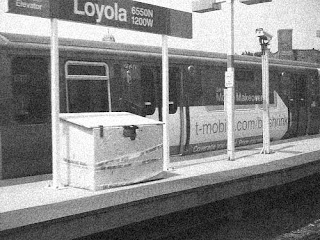
The linked-up aluminum cars would brake and screech along the tracks and through the final turn before crawling and hissing into the Loyola station. Echoes from almost inaudible announcements would bounce across the frozen pavement and against the campus buildings.
Even with a powdery new snowfall, it was a grey world – the platform, the trains, the lives.
At times, the trains seem suspended in the air just above the crumbling overpass. Ambulances would rush underneath, blaring and screaming, ricocheting north or south, destination heaven or hell. Against the broken curbs were a collection of trash and street sludge snow cones.
Beyond the stone buildings that bounded the campus like the walls of a keep, the city streets lurked. Faded billboards stalked Sheridan Road like zombies, with faceless ads about malt liquors or lawyers or paternity. And just a short walk from the holy cathedral of the Madonna, it was too dangerous to be alone, especially at night.
Inside the protected quadrangle, we didn't feel the threats or the taunts of the city. Instead, we learned of neuroses.
The revelation was in theology (an appropriate place), which was required coursework when studying for the Jesuits. The revelation was that a normal person is really not normal at all. If they seem normal - and happy - then they are undoubtedly and successfully neurotic. They have created a perception of reality that helps them to cope. They hear sirens but can't feel the trauma. See the billboards but block the messages.
This mental faculty keeps us sane. It’s like a vestigial sort of mental miracle. On a daily basis, it softens the sharper edges of reality. But when life’s pain becomes intense, it can carry us all by itself. Without it, we might be unable to continue the lives we thought we had. Without it, we might find ourselves atop a bridge and leaning out - with pain too great to bear.
Perhaps the Jesuits, at times, disguised this miraculous faculty as a Trojan Horse.
But they know it's faith. It's God, helping our souls carry burdens too heavy for us to lift by ourselves.
Maybe one day, you'll be riding the L train, feeling a pain you believe has changed you forever. Hold on tightly as the train screeches and swerves, and nearly throws you from your seat. When the wheels grind to a halt, hurry off the train, down the stairs and across the street.
Step into the quadrangle.
Breathe deeply and feel the gentle snowflakes fall around you. Listen to the muted sounds of the train as it fades into the distance. Follow the warm pools of light that fall beneath the familiar buildings. Feel the comfort of walking with other students toward your dorm and your friends and the life you have known.
Then, look across campus, toward the eaves of the church of the Madonna.
Feel the pain fade.
*****
John Simmerling
Writer, poet, and artist. Exploring family stories, grief, love, and the small moments that shape who we are. Drawings from my mind.
Related Posts
Poetry
Nobody gets too much Heaven no More
A nostalgic poem about summer days, bicycles, and fleeting moments that feel like heaven.
August 17, 20251 min read
Read Poetry
Wake up Suzy, walk with me into the light
A heartfelt poem about walking into light and feeling whole again after a difficult night.
December 22, 20242 min read
Read 
Poetry
On the Beach of Everything
A poetic reflection on past love, memories, and the journey through bittersweet endings.
October 11, 20232 min read
Read